





Director – Neurology
Multiple sclerosis (MS) is an autoimmune neurological disorder in which the immune system attacks the myelin sheath covering nerve fibres in the brain and spinal cord, causing plaques (lesions) at multiple sites — hence 'multiple sclerosis.' It typically presents in young adults (20–40 years) with relapsing episodes of neurological dysfunction (visual loss, limb weakness, sensory symptoms, cerebellar problems) followed by recovery. MRI brain and spine, visual evoked potentials, and CSF analysis confirm the diagnosis. Disease-modifying therapies (DMTs) significantly reduce relapse frequency and long-term disability. At Medanta Hospital, Sector 50, Noida, Dr. Kapil Singhal and Dr Namita Kaul manages MS with a structured, evidence-based approach.
Symptoms
Treatments
Dr. Kapil Singhal
Director – Neurology
M.D. D.M

Dr. Namita Kaul
Director – Neurology
M.D. DNB
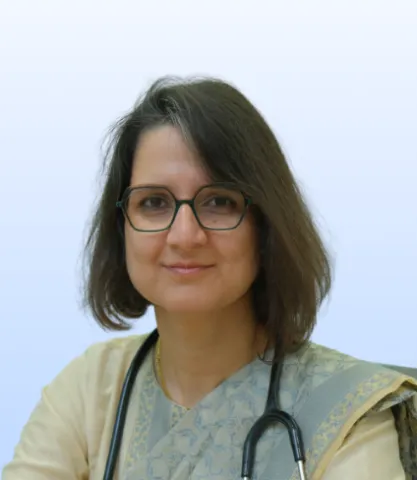
Dr. Prerna Dogra
Consultant – Neurology
DNB
Is MS curable?
There is currently no cure for MS, but many patients with relapsing-remitting MS can achieve long periods of stability — even near-normal function — with modern high-efficacy disease-modifying therapies such as natalizumab or ocrelizumab. Early treatment before significant disability accumulates gives the best long-term outcomes. Neurologists at Team Sushrut tailors DMT selection to each patient's MS type, activity, and comorbidities.
How is MS diagnosed in Noida?
MS diagnosis requires: MRI brain and spine showing demyelinating plaques (McDonald Criteria 2017), evoked potentials (visual, sensory, auditory), CSF analysis (oligoclonal bands, IgG index), and exclusion of alternative diagnoses. Neurologists at Team Sushrut, Medanta Hospital, Sector 50, Noida provides full MS diagnostic work-up. MRI is available at Medanta Noida.
What is the difference between relapsing-remitting and progressive MS?
Relapsing-remitting MS (RRMS, 85% at onset) has distinct episodes of neurological dysfunction followed by full or partial recovery. Secondary progressive MS (SPMS) evolves from RRMS — relapses become less common but disability accumulates steadily. Primary progressive MS (PPMS, 15%) has steady worsening from onset without relapses. Treatment options differ across MS types; ocrelizumab is the first approved DMT for PPMS.
Does pregnancy worsen MS?
Pregnancy typically reduces MS relapse rate — likely due to natural immunosuppression. However, the post-partum period (especially 3–6 months after delivery) carries a high relapse risk. Most DMTs are stopped during pregnancy; natalizumab can be continued into the second trimester in active MS under specialist guidance. Neurologists at Team Sushrut counsels women with MS planning pregnancy on drug management and relapse risk.