

Director Neurointervention & Stroke
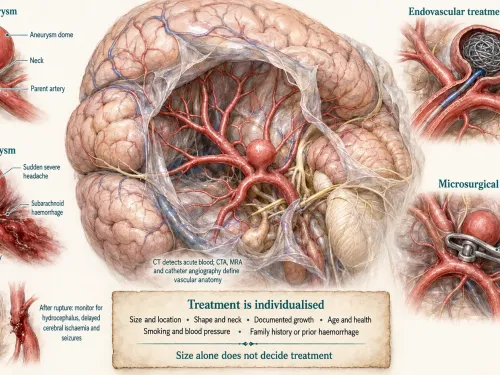
Subarachnoid haemorrhage (SAH) is bleeding into the subarachnoid space — the area between the brain and the arachnoid membrane — most commonly caused by rupture of a brain aneurysm (80% of cases). The hallmark is the sudden 'thunderclap' headache — the worst headache of the patient's life — that comes on in seconds. SAH is a life-threatening emergency with 10–15% of patients dying before reaching hospital and significant morbidity from delayed vasospasm (cerebral artery narrowing occurring 4–14 days after bleed). Urgent CT brain, lumbar puncture if CT is negative, and neurovascular treatment are mandatory.
Symptoms
Treatments
Dr. Manish Vaish
Director and Head - Neurosciences
DNB. AANS International Fellow
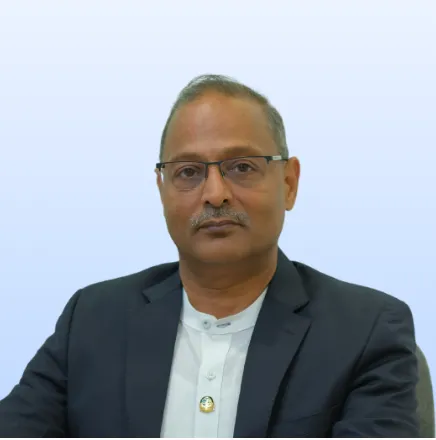
Dr. Girish Rajpal
Director – Neurointervention Surgery and Stroke
M.Ch, AFSA, FINR
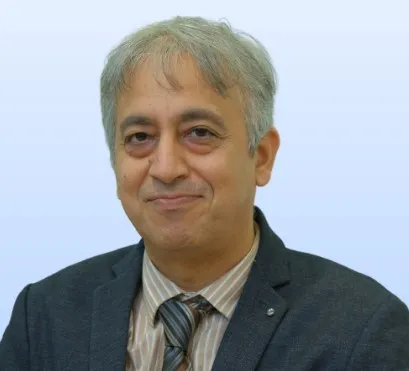
Dr. Deepak Lohia
Consultant – Neurosurgeon and Endovascular Neurosurgeon
M.Ch, Fellow Osaka Metropolitan University, Japan
What is the thunderclap headache and why is it an emergency?
A thunderclap headache reaches maximum intensity within seconds — patients describe it as 'being hit on the back of the head' or 'the worst headache of my life.' It is the sentinel symptom of subarachnoid haemorrhage from a ruptured aneurysm and must be treated as a medical emergency until proven otherwise. Do not wait for symptoms to settle — go to emergency immediately. CT brain is performed first; if negative, a lumbar puncture is performed to detect blood in the CSF.
Should a ruptured aneurysm be clipped or coiled?
Both methods secure the aneurysm and stop re-bleeding. Coiling (endovascular) is preferred for older patients and for certain aneurysm locations and shapes. Clipping is preferred for younger patients and for complex aneurysm morphologies where coiling is less durable. At Medanta Noida, Dr. Vaish (clipping) and Dr. Rajpal (coiling) jointly determine the safest approach for each ruptured aneurysm within 24–48 hours of admission.
What is vasospasm after subarachnoid haemorrhage?
Delayed cerebral vasospasm is narrowing of brain arteries occurring 4–14 days after SAH, caused by substances in the subarachnoid blood. It is the leading cause of delayed neurological deterioration and disability after SAH. Prevention includes nimodipine (a calcium channel blocker given for 21 days), adequate hydration, and blood pressure optimisation. If vasospasm develops, endovascular balloon angioplasty by Dr. Rajpal can open the narrowed arteries.
Is there 24×7 SAH emergency care in Noida?
Yes. Medanta Hospital, Sector 50, Noida provides 24×7 neurovascular emergency care for subarachnoid haemorrhage. Team Sushrut — Dr. Vaish (AANS International Fellow) and Dr. Rajpal (FINR) — is on call around the clock. Emergency contact: +91 98103 24401.