

Director Neurology
Parkinson's disease is a progressive neurodegenerative disorder caused by the loss of dopamine-producing neurons in the substantia nigra, presenting with tremor at rest, rigidity, bradykinesia (slowness), and postural instability. It is the second most common neurodegenerative disease after Alzheimer's. While there is currently no cure, Parkinson's disease can be well managed for many years with medication and, in suitable patients, deep brain stimulation (DBS) surgery. At Medanta Hospital, Sector 50, Noida, Dr. Namita Kaul and Dr. Kapil Singhal — who pioneered Noida's first DBS programme — provides comprehensive Parkinson's care.
Symptoms
Treatments
Dr. Namita Kaul
Director – Neurology
M.D. DNB
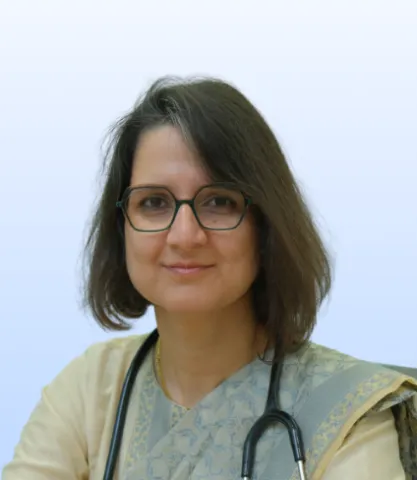
Dr. Kapil Singhal
Director – Neurology
M.D. D.M
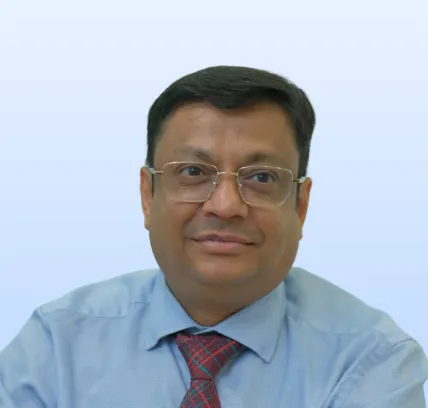
Dr. Yashpal Singh Bundela
Director – Neurosurgery, Functional Neurosurgery and Spine Surgery
M.Ch

Dr. Anil Dhar
Associate Director – Neurosurgery and Stereotactic Radiosurgery
M.Ch.
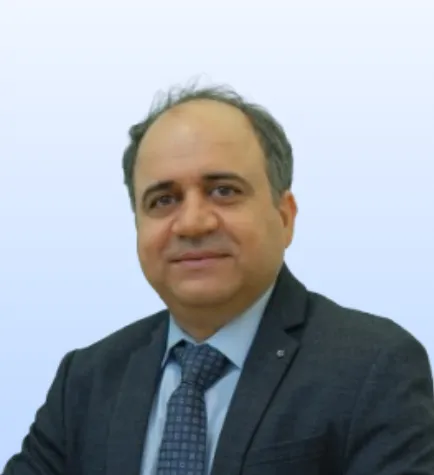
Dr. Prerna Dogra
Consultant – Neurology
DNB
Dr. Payas Joshi
Consultant – Neurology
DNB
Dr. Ashutosh Kumar
Consultant – Neurosurgeon
DNB
Can Parkinson's disease be cured?
There is currently no cure for Parkinson's disease. However, symptoms can be very effectively controlled with medication and, in selected patients, deep brain stimulation (DBS) surgery for many years. Research into disease-modifying treatments (including alpha-synuclein-targeted therapies) is active. Dr. Namita Kaul and Dr. Kapil Singhal at Team Sushrut provides regular reviews to optimise medication as the disease evolves.
Is DBS available for Parkinson's in Noida?
Yes. Dr. Namita Kaul and Dr. Kapil Singhal , Director Neurology, Medanta Hospital, Sector 50, Noida pioneered Noida's first DBS programme. DBS surgery for Parkinson's disease is performed at Medanta Hospital, Sector 50, Noida. Dr. Singhal's team provides comprehensive DBS candidacy evaluation including levodopa challenge testing, neuropsychology, and MRI.
When is levodopa started for Parkinson's disease?
Levodopa is started when symptoms begin to significantly affect daily function — typically when one-sided tremor, rigidity, or slowness impacts walking, work, or self-care. The decision to start levodopa is individualised; some neurologists delay initiation in young patients to reduce the risk of early levodopa-induced dyskinesia, using dopamine agonists first. Dr. Singhal at Team Sushrut tailors the medication strategy to each patient's age, symptom burden, and occupational requirements.
What is the difference between Parkinson's disease and essential tremor?
Essential tremor (ET) is an action tremor (occurs when moving, not at rest), typically bilateral, primarily affecting hands and head, with no associated rigidity or bradykinesia. Parkinson's tremor is a resting tremor, typically unilateral at onset, associated with rigidity and slowness. Both conditions are treatable but with different medications. Misdiagnosis is common; Dr. Kaul and Dr. Singhal at Team Sushrut provides expert movement disorder assessment to distinguish between them.