



Director & HOD – Neurosciences
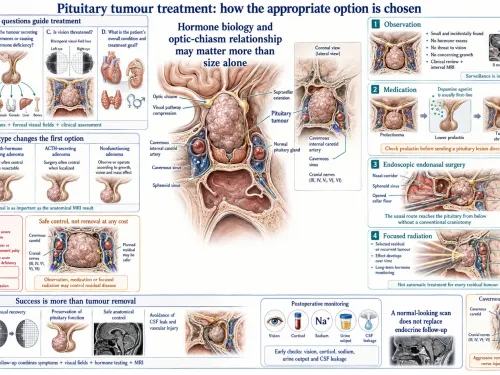
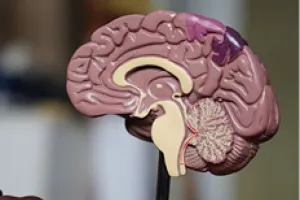
A pituitary adenoma is a benign (non-cancerous) tumour of the pituitary gland — a pea-sized gland at the base of the brain that regulates multiple hormones. Adenomas are classified by size (microadenoma <1 cm, macroadenoma ≥1 cm) and by hormonal activity (functioning: prolactinoma, acromegaly, Cushing's disease; non-functioning). Large adenomas compress the optic chiasm, causing characteristic bitemporal visual field loss. Treatment depends on the tumour type: prolactinomas are primarily treated with dopamine agonists; most other adenomas require surgery. At Medanta Hospital, Secro 50, Noida, Dr. Vaish performs endoscopic transnasal pituitary surgery.
Symptoms
Treatments
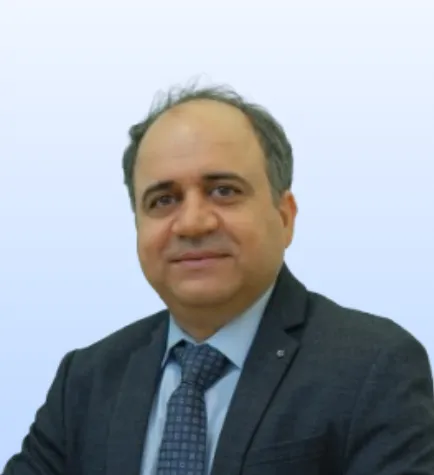
Dr. Manish Vaish
Director and Head - Neurosciences
DNB. AANS International Fellow

Dr. Yashpal Singh Bundela
Director – Neurosurgery, Functional Neurosurgery and Spine Surgery
M.Ch

Dr. Anil Dhar
Associate Director – Neurosurgery and Stereotactic Radiosurgery
M.Ch.
What is pituitary apoplexy?
Pituitary apoplexy is a sudden haemorrhage or infarction into a pituitary adenoma, causing sudden severe headache (thunderclap), visual loss, double vision (ophthalmoplegia), and potentially rapid deterioration of consciousness. It is a neuro-endocrine emergency requiring urgent imaging, high-dose hydrocortisone, and often emergency neurosurgical decompression. If you or someone develops sudden severe headache with visual symptoms, call emergency services immediately.
Is pituitary surgery done through the nose in Noida?
Yes. Dr. Manish Vaish (AANS International Fellow) and Team performs fully endoscopic transnasal transsphenoidal pituitary adenoma surgery at Medanta Hospital, Sector 50, Noida. There is no external incision. The endoscope passes through the nostril and nasal cavity directly to the sphenoid sinus and pituitary fossa. Most patients go home within 3–5 days.
Can a pituitary tumour cause infertility?
Yes. Prolactin-secreting adenomas (prolactinomas) are a common and treatable cause of infertility in young women. Excess prolactin suppresses the normal hormonal cycle, causing irregular or absent periods. Treatment with a dopamine agonist (cabergoline) normalises prolactin levels, restores menstrual cycles, and enables fertility — usually without surgery.
Do I need hormone replacement after pituitary surgery?
This depends on whether the remaining normal pituitary tissue continues to function adequately. Post-operative testing includes cortisol (an essential hormone), thyroid function, and testosterone/oestrogen levels. If any axis is deficient, hormone replacement is prescribed. Dr. Vaish's team coordinates endocrinology input at Medanta Noida for all pituitary surgical patients.