

Back Pain vs Sciatica: When Should You See a Spine Specialist?

Quick answer

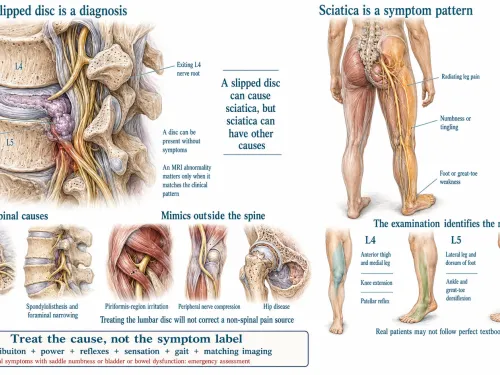
Back pain refers to pain arising in the lower back, often muscular or from the discs and joints of the spine. Sciatica refers to pain radiating from the back into the buttock and down the leg along the course of the sciatic nerve. Sciatica points to a nerve root problem, and if it is severe, persistent, associated with weakness, numbness, or bladder or bowel changes, it deserves earlier specialist review than isolated mechanical back pain.

Show More

Image
Back Pain vs Sciatica


How the two patterns differ

When ordinary back pain can be managed initially without a specialist

A short episode after lifting, prolonged sitting or unfamiliar activity that is already improving, with normal leg strength and no systemic warning signs, can often begin with activity modification, walking, simple pain control where appropriate and a graded return to exercise. Prolonged bed rest tends to slow recovery. Imaging is not automatically required in the first days of uncomplicated back pain.

When sciatica deserves earlier review

Sciatica suggests that a nerve root is involved. If pain is severe but strength is normal and symptoms are improving, conservative care is still reasonable. Earlier specialist assessment is useful when pain remains disabling, the diagnosis is uncertain, symptoms recur repeatedly, or there is objective numbness or weakness. A neurological examination can identify the likely nerve level before imaging is interpreted.

Red flags that should not wait

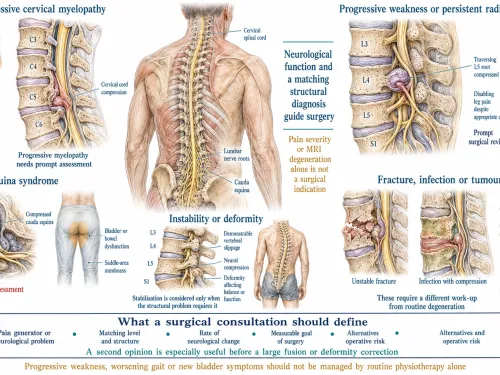
  • New urinary retention, incontinence or bowel dysfunction with back and leg symptoms.
  • Numbness around the saddle or perineal region.
  • Rapidly worsening leg weakness or new foot drop.
  • Fever, significant infection risk or immune suppression with severe spinal pain.
  • History of cancer with new persistent spinal or radicular pain.
  • Major trauma, particularly with osteoporosis or older age.
  • Progressive difficulty walking or signs suggesting spinal cord involvement.

What a spine specialist adds

The purpose is not to recommend surgery to everyone. A specialist can localize the neurological problem, decide whether MRI is likely to change management, distinguish spinal from hip or peripheral nerve disease, and define whether a structured rehabilitation, injection or surgical option is appropriate. In many consultations the useful outcome is confirmation that surgery is not needed.

When MRI becomes useful

MRI is particularly useful when radicular symptoms persist, objective weakness is present, an intervention is being considered or there are red flags. It can show disc herniation, stenosis and other causes of compression. Because incidental abnormalities are common, MRI must be read in the context of the patient’s side, distribution of pain and examination.

A practical timing guide

  1. Emergency symptoms: seek immediate assessment.
  2. Progressive weakness or walking deterioration: arrange prompt specialist review.
  3. Persistent sciatica that limits normal life despite appropriate treatment: consider spine review and MRI correlation.
  4. Back pain that is improving and has no red flags: continue conservative management with follow-up if recovery stalls.

Walking behaviour can help separate stenosis from other causes

Some patients with lumbar stenosis develop leg heaviness, pain or numbness after standing or walking and improve when they sit or bend forward. This is called neurogenic claudication. Vascular claudication can also produce exertional calf pain but follows a different circulatory mechanism. Pulses, vascular risk factors, posture dependence and imaging help distinguish the two.

Hip disease can masquerade as a spine problem

Hip arthritis often causes groin pain, reduced hip rotation and difficulty with shoes, stairs or getting out of a low chair. It can coexist with lumbar degeneration. When both hip and spine imaging look abnormal, the examination becomes essential to decide which problem is producing the dominant disability and which should be treated first.

Duration matters less than direction of change

A two-week episode that is clearly improving may need only conservative care, while a two-week episode with rapidly worsening weakness is urgent. A six-month history that is stable and tolerable can sometimes continue non-surgically, while six months of disabling sciatica despite a well-conducted treatment programme may justify intervention. The trajectory is more informative than the calendar alone.

Work and posture should be addressed without creating fear

Desk work, long driving and heavy manual work can aggravate symptoms, but the answer is not permanent avoidance of bending or lifting. Short-term modification followed by progressive conditioning is usually more sustainable. For recurrent back pain, improving general strength, sleep, body weight where relevant and work ergonomics can reduce disability even when MRI degeneration remains visible.

Night pain needs context rather than automatic alarm

Pain at night can occur with ordinary mechanical and radicular conditions because certain positions aggravate symptoms. Concern rises when night pain is persistent, progressive and accompanied by unexplained weight loss, fever, a history of cancer or other systemic features. Red flags are combinations of findings, not isolated internet checklist items.

Older adults can have more than one reason for walking limitation

Lumbar stenosis, knee arthritis, hip arthritis, peripheral neuropathy and vascular disease frequently coexist. Asking how far the patient can walk, what makes them stop, whether bending forward helps, and whether there is numbness or weakness helps identify the dominant cause. Treating the lumbar MRI alone may not restore walking if another condition is equally limiting.

When persistent back pain deserves specialist review even without sciatica

Back pain that remains disabling despite a well-structured rehabilitation programme, repeatedly recurs with major functional loss, or is associated with deformity, fracture risk or systemic warning signs deserves further assessment even if there is no classic nerve pain. The outcome of that consultation may still be non-surgical, but persistent unexplained disability should not be managed indefinitely with repeated short courses of medication alone.

A specialist review is also reasonable when recurrent episodes repeatedly interrupt work or normal activity even though each attack eventually settles. The aim is to identify modifiable mechanical factors, confirm that no neurological problem is being missed, and decide whether further imaging or structured rehabilitation would change the long-term pattern.

Common Patient Questions

Can sciatica settle on its own?

Yes. Many cases related to disc herniation improve over several weeks with non-surgical care.

Does back pain with leg pain always mean a slipped disc?

No. Stenosis, hip disease, peripheral nerve problems and other conditions can mimic or cause leg symptoms.

How do I know if weakness is real?

Difficulty lifting the foot, standing on toes, climbing stairs or repeated giving way can suggest motor involvement. Examination can grade power objectively.

Should I get an MRI before seeing a specialist?

Not always. If there are urgent neurological symptoms, imaging is often arranged quickly. For routine pain, a clinical assessment can help avoid unnecessary scans.

Can a spine specialist treat without surgery?

Yes. Spine specialists frequently recommend medication, rehabilitation, observation or injections when an operation is not indicated.

For patients in Noida and the wider region

For patients in Noida and the NCR, persistent sciatica or neurological symptoms can usually be assessed without delay. Patients from Uttar Pradesh, Madhya Pradesh or Bihar who already have scans should bring the original DICOM images rather than only the written report, especially if surgery has been suggested elsewhere.

Editorial medical references

  • AANS: Herniated Disc

A common misconception

Sciatica is not more serious than back pain because it hurts more. It is a different problem because it involves a nerve root, and its evaluation and treatment are different.

Do not find what you're looking for?

Our specialists are here to help. Get expert answers tailored to your condition—no waiting, no guesswork