


Back Pain

What is Back Pain?

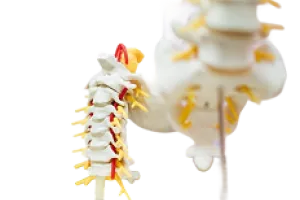
Back pain is discomfort occurring anywhere along the spine but most commonly affects the lower back. It may be acute, chronic, localized, or radiating.

Common Causes

  • Muscle strain
  • Lumbar disc prolapse
  • Degenerative disc disease
  • Spinal stenosis
  • Arthritis
  • Trauma
  • Osteoporosis
  • Nerve compression 

Investigations

  • X-ray Spine
  • MRI Spine
  • CT Scan
  • Bone density testing
  • Blood tests 

Treatment Options

  • Physiotherapy
  • Exercise programs
  • Pain medications
  • Weight management
  • Injections
  • Surgery when necessary 

Red Flags

  • Bladder dysfunction
  • Limb weakness
  • Fever
  • Trauma
  • Unexplained weight loss 

FAQs

Can back pain resolve on its own?

Many cases improve with conservative treatment.

Is surgery always required?

No. Most patients improve without surgery.

Can sitting worsen back pain?

Yes. Prolonged sitting may aggravate symptoms.

When to Consult

Early diagnosis can help prevent chronic pain and disability.

Convulsions

What are Convulsions?

Convulsions are sudden involuntary muscle contractions caused by abnormal electrical activity in the brain. They may involve jerking movements, loss of awareness, or temporary loss of consciousness.

Common Causes

  • Head injury
  • Epilepsy
  • Brain infection
  • Stroke
  • Brain tumors
  • High fever
  • Metabolic disturbances 

How is it Diagnosed?

Assessment includes:

  • Medical history
  • Witness accounts
  • Neurological examination 

Investigations

  • EEG
  • MRI Brain
  • CT Brain
  • Blood tests 

Treatment Options

  • Anti-seizure medications
  • Treatment of underlying cause
  • Emergency management for prolonged episodes 

When Should You Consult a Doctor?

All first-time convulsions require medical evaluation.

Red Flags

  • Convulsion lasting >5 minutes
  • Repeated episodes
  • Injury during episode
  • Breathing difficulty 

FAQs

Are convulsions the same as seizures?

Convulsions are a type of seizure involving muscle jerking.

Can head injury trigger convulsions?

Yes. Brain trauma is a recognized cause.

Is treatment always required?

Treatment depends on the cause and recurrence risk.

When to Consult:

Prompt neurological assessment can help identify the cause of convulsions and prevent future episodes.

Migraine

What is Migraine?

Migraine is a primary neurological disorder characterized by recurrent episodes of moderate to severe unilateral (or occasionally bilateral) headache, typically pulsating in quality, lasting 4–72 hours, and associated with nausea, vomiting, photophobia, and phonophobia. It is the second most common cause of disability worldwide.

Approximately 25–30% of migraine patients experience aura — transient, fully reversible neurological symptoms (typically visual, sensory, or speech-related) that precede or accompany the headache phase. In "migraine aura without headache," neurological symptoms occur without the headache phase.

Headache Classification Committee of the International Headache Society. ICHD-3. Cephalalgia. 2018;38(1):1–211. doi:10.1177/0333102417738202 — Authoritative classification and diagnostic criteria for migraine.

Diagnosis

ICHD-3 criteria for migraine without aura require: ≥5 attacks lasting 4–72 hours with at least 2 of the following headache features (unilateral, pulsating, moderate/severe, worsened by activity) AND at least 1 of: nausea/vomiting, or photophobia and phonophobia.

Treatment

  • Acute: triptans (first-line), NSAIDs, antiemetics, CGRP antagonists (gepants)
  • Preventive: beta-blockers (propranolol), topiramate, amitriptyline, anti-CGRP monoclonal antibodies (erenumab, fremanezumab)
  • Lifestyle: sleep hygiene, hydration, stress management, trigger avoidance

🔴 RED FLAGS — Seek Emergency Care Immediately

• "First or worst" headache — requires exclusion of SAH

• Headache with fever and neck stiffness — meningitis

• New aura in patient >50 years — exclude TIA/stroke

• Progressive headache — exclude space-occupying lesion

• Headache with papilloedema — exclude raised ICP

Subscribe to fever